
How to Become a Physical Therapist in Australia | Is Work Experience Required?
Australia remains one of the top destinations for Filipino and internationally educated physical therapists who want a high-paying, stable, and long-term career abroad.
With excellent work–life balance, strong demand for healthcare workers, and migration pathways, it’s no surprise that physiotherapy (or “PT” in the Philippines) continues to rank among Australia’s most in-demand professions.
But the big questions remain:
How do you become a licensed Physical Therapist in Australia?
Is work experience required?
And which visa options should Filipino PTs consider?
This guide will walk you through everything—from the PT equivalency pathway, visa requirements, English exams, and Australia’s points-based immigration system, to alternative options if you want to work abroad faster.
Table of Contents
Overview: Can Foreign-Trained Physical Therapists Work in Australia?
Yes. Australia accepts internationally educated physiotherapists, but you must meet several steps:
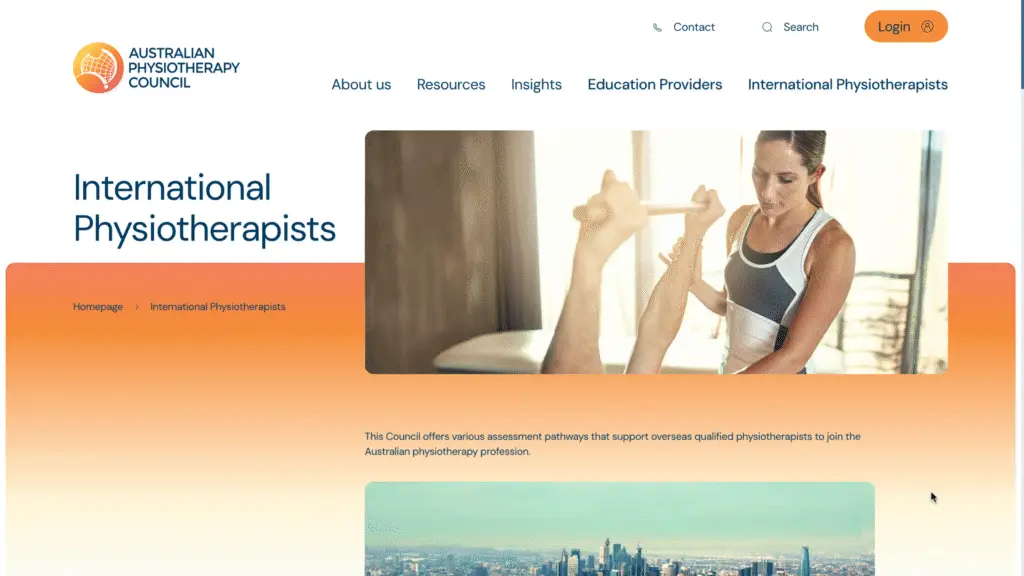
Complete the APC Assessment Process (APC APEP) – The Australian Physiotherapy Council evaluates your degree, experience, and competencies.
- Accomplish your Australian Physiotherapy Council Final Certificate
Meet English language requirements for Physiotherapists migrating to Australia – IELTS, PTE, or OET (with high minimum scores), this will be needed as a requirement in completing your Skills Assessment
Assessment for Skilled Migration Visas – a document-based assessment of international physiotherapists’ qualifications and skills to ensure they meet certain visa requirements in Australia.
Choose a Migration Pathway (Visa Application)
– Skilled migration, state nomination, or employer sponsorship.
Visa Options for Physical Therapists Migrating to Australia
Physiotherapists fall under ANZSCO Code 252511, which is listed on Australia’s Skilled Occupation List—meaning it qualifies for various skilled visas.
Below are the best visa options for PTs:
A. Skilled Independent Visa (Subclass 189)
Best for: PTs who want full permanent residency (PR) without needing a job offer or state sponsor.
Key Features
No employer needed
No state nomination required
You must receive an invitation via the SkillSelect EOI system
Highest competitiveness (usually requires high points)
Benefits
Direct PR
Free to live and work anywhere in Australia
Eligible for Medicare and pathway to citizenship
B. Skilled Nominated Visa (Subclass 190)
Best for: PTs with 70–80 points looking for better chances of receiving an invitation.
Key Features
Requires a state or territory to nominate you
Gives +5 points to your score
Still grants direct PR
Most states prioritize healthcare and allied health professionals, making PTs highly favorable.
C. Skilled Work Regional Visa (Subclass 491)
Best for: PTs who want a more achievable pathway to PR with lower points.
Key Features
5-year provisional visa
You earn +15 points for nomination
Must live and work in a designated regional area
Leads to PR after 3 years (via subclass 191)
Why PTs choose 491
Regional areas have severe shortages
Higher chance of nomination
Lower competition compared to metro areas
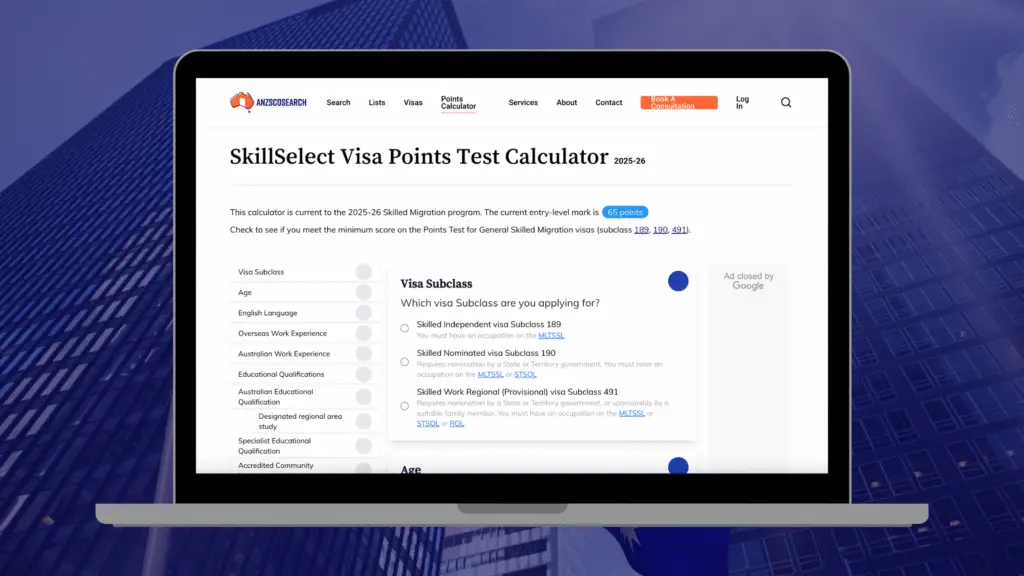
Understanding Australia’s Visa Point System for Physiotherapists
To apply for skilled visas (189, 190, 491), applicants must meet the Points Test, which includes:
Point Factors
Age (maximum points for ages 25–32)
English proficiency
Overseas work experience
Education level
Australian study or work
State nomination (190 = +5 points; 491 = +15 points)
Partner skills
Why Physical Therapists Often Need 80–85 Points
Healthcare professions like physiotherapy are highly competitive, especially for subclass 189 and 190.
Current trends show that invitations are typically issued to applicants with:
80–85+ points for 189
75–80+ points for 190
This is why many Filipino PTs rely on:
Strong English exam scores (to raise points)
Extra points via state nomination
Using 491 as an initial pathway to PR
But why do Filipino Physical Therapists still require high points despite PT shortage in Australia?
The demand is high, but so is competition from:
UK physiotherapists
Indian physiotherapists
Irish and South African applicants
These groups often score higher in English exams, boosting the points threshold.
Why is Work Experience Required to Become a Physical Therapist in Australia
Short answer: You can start the APEP pathway even without work experience. BUT—work experience becomes important for raising your visa points to get higher chances of success, getting a nomination and ultimately — securing a job in Australia.
A. Raising Your Visa Points
If you only have 0–2 years of experience, there’s still a chance that you can still migrate, but your points may be lower.
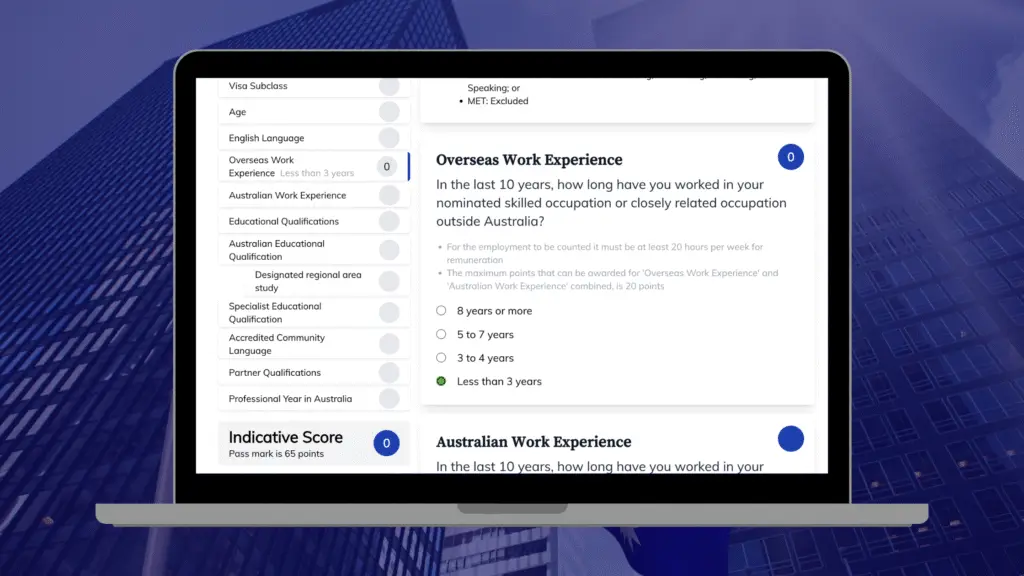
The more relevant PT work experience you have, the more points you can claim, see table summary below:
| Overseas Work Experience | Points |
|---|---|
|
Less than 3 years |
0 points |
|
3–5 years |
5 points |
|
5–8 years |
10 points |
|
8+ Years |
15 points |
B. Improving Your Skills Assessment Outcome
While APC does not require work experience, having a strong work history can help demonstrate:
Professional capability
Application readiness
Familiarity with international clinical standards
C. Increasing Your Employability After Registration
Once you are allowed to practice, Australian employers prefer PTs who have:
Strong clinical experience
Varied caseload exposure
Experience with documentation and evidence-based practice
However, this affects employment, not migration eligibility.
The Untold Challenge: Passing the English Exam Requirement
One of the biggest hurdles for Filipino PTs is achieving the required English scores.
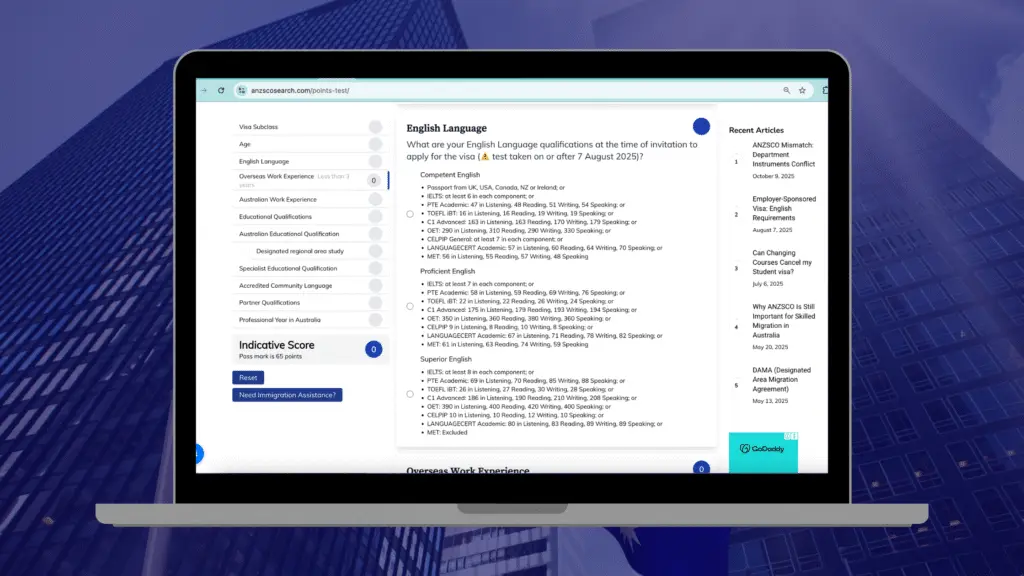
Minimum English Requirements for PTs
(Depending on AHPRA/APC rule updates)
IELTS Academic: 7.0 in each band (no subtest below 7)
PTE Academic: 65 overall, usually with minimums of 65 in each band
OET: B in all subtests
Why English Scores Matter for Migration
High English proficiency = higher points
Most successful PT applicants:
Aim for IELTS 8 or PTE 79+
Use English test results to boost total points to the 80–85+ range
Even if your skills assessment is complete, without strong English scores, your visa might not progress.
| English Level | Points |
|---|---|
|
Competent (IELTS 6) |
0 points |
|
Proficient (IELTS 7) |
5 points |
|
Superior (IELTS 8) |
10 points |

If Australia feels too competitive and expensive, here are equally strong opportunities, these are the alternatives and best countries that you can migrate to as a Filipino Physical Therapist.
A. United States (USA)
Salary: USD $80,000 – $120,000/year
Must pass NPTE
Requires FCCPT/CWT5 credentialing
H-1B or immigrant visa sponsorship is common
Agencies can help secure employer sponsorship
B. Canada
Salary: CAD $60,000 – $95,000/year (USD $32,000 to $65,000)
Credentialing via CAPR
Requires PCE Written (although many changes are ongoing)
Provincial pathways exist for healthcare workers
Self-finance pathway
C. United Kingdom (UK)
Salary: £28,000 – £45,000/year (USD $32,624 to $52,432)
No licensing exam required
Registration with HCPC
Employers frequently sponsor overseas PTs
Faster processing compared to Australia
FAQs: Becoming a Physical Therapist in Australia
You can start the APEP pathway even without work experience. BUT—work experience becomes important for raising your visa points to get higher chances of success, getting a nomination and ultimately -- securing a job in Australia.
You can start the APEP pathway even without the English exam first. But you will need to pass and get one before you can proceed to the APC Skills Assessment and the following:
Visa application
Skills assessment scores
Points calculation
Timelines vary, but average durations for Physical Therapists with qualified work experience are:
APC APEP Assessment: 6 months to 8 months
- Skills Assessment: 1-2 months
EOI waiting time: 1–12 months depending on points
Visa processing: 6–12 months
A motivated applicant have a chance of completing everything in 18 to 24 months or more.
Not everyone gets an invitation immediately. Some applicants wait months or even more years.
Yes—because of high salary, career stability, and PR opportunities.
However, competition, cost of living, and points requirements can be challenging.
Conclusion
Becoming a physical therapist in Australia is absolutely possible for Filipino and international PTs—but the pathway requires:
Completing APC assessment
Meeting high English scores
Understanding the visa points system
Preparing financially for visa and documentation fees
Targeting states where PTs are in demand
Work experience is not required, but it greatly helps—especially in improving visa points and employability. You can also check-out other articles related about working as a PT in Australia:
- Why International Physiotherapy candidates fail the Australian Physiotherapy Council assessment
- Physical Therapist Salary in Australia – Pros and Cons of Migrating