How to Become a Physical Therapist in Canada from the Philippines | Everything You Need to Know
Canada is one of the most popular destinations for Filipino healthcare professionals due to its strong healthcare system, competitive salaries, and pathways to permanent residency.
However, working as a physical therapist in Canada is not as straightforward as applying for a job abroad. Physiotherapy is a regulated profession, meaning you must first obtain a professional license before legally practicing.
To become a licensed physiotherapist in Canada, Filipino PTs must complete several steps including:
Credential assessment through the Canadian Alliance of Physiotherapy Regulators (CAPR)
English or French language proficiency
Passing the Canadian Physiotherapy Competency Examination (PCE)
Registration with a provincial regulatory college
Obtaining a visa or permanent residency
This guide will explain everything Filipino physical therapists need to know, including requirements, processes, costs, advantages, and challenges.
Step-by-Step Guide: How to Become a Physical Therapist in Canada from Philippines
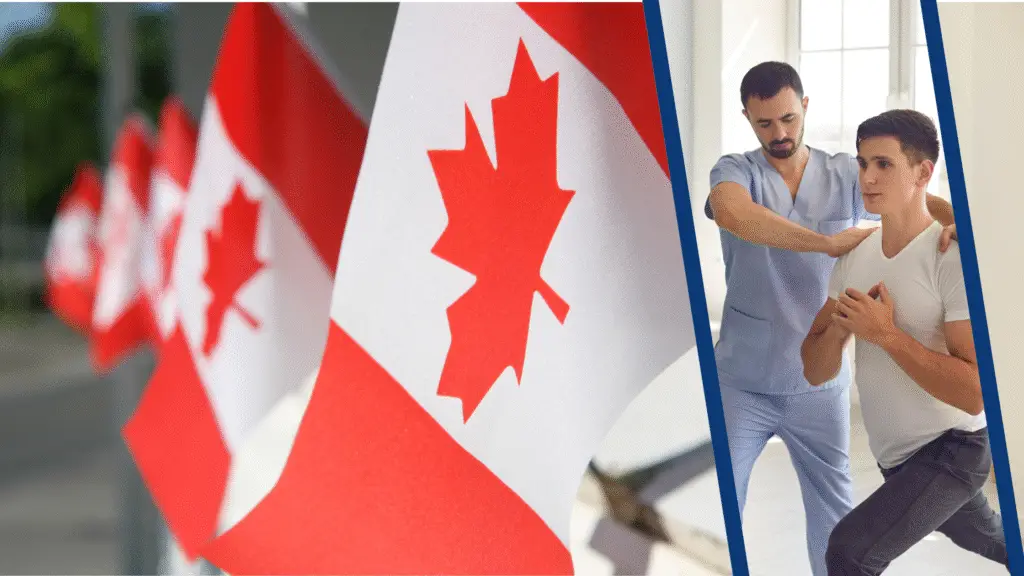
Why Many Filipino Physical Therapists Want to Work in Canada
Canada has a growing demand for rehabilitation professionals due to an aging population and increasing healthcare needs.
Internationally educated physiotherapists already make up about 25% of the physiotherapy workforce in Canada, highlighting the importance of foreign-trained professionals in filling healthcare shortages.
For Filipino PTs, Canada offers several benefits:
High salary potential
Stable healthcare system
Opportunities for permanent residency
High quality of life
However, the licensure process can be long and competitive.
Requirements to Become a Physical Therapist in Canada
If you graduated from a Bachelor of Science in Physical Therapy in the Philippines, you must prove that your education meets Canadian standards.
The licensing process starts with credential assessment.
1. Educational Qualification
To qualify for credential assessment, you must have:
A university-level physiotherapy degree
A degree equivalent to Canadian entry-level physiotherapy education
CAPR verifies if your education is comparable to Canadian programs.
2. Clinical Internship Hours
Your program must include at least 1,025 hours of supervised clinical practice including:
100 hours musculoskeletal
100 hours neurological
40 hours cardiorespiratory
These clinical hours are mandatory for credential evaluation.
3. English Language Test
Most Filipino applicants must submit proof of language proficiency such as:
Accepted exams include:
IELTS Academic
TOEFL
Other approved language tests
Language results must usually be within the last two years.
4. Canadian Healthcare Context Course
Applicants must also complete a course about physiotherapy practice in Canada.
Examples include programs offered by:
University of Toronto
University of Alberta
This requirement ensures foreign PTs understand the Canadian healthcare system.
Step-by-Step Process: How to Become a Physical Therapist in Canada from the Philippines
Here is the typical pathway for Filipino physical therapists who want to work in Canada.
Step 1: Prepare for the English Language Exam
Before or during your credential assessment application, you must take an approved English test such as:
IELTS Academic
TOEFL
Some provinces may also accept other exams depending on regulatory requirements.
Step 2: Submit English Results to CAPR
When applying for credential assessment through the Canadian Alliance of Physiotherapy Regulators, you must include your official English test results.
Your scores will be evaluated to confirm that you have the communication skills required to safely practice physiotherapy in Canada.
Step 3: Credential Assessment (CAPR)
It is important to note that you cannot proceed to this next stage of the licensing process without meeting the required language score.
During this stage, CAPR reviews:
Your degree
Clinical training
Identity documents
Language proficiency
Credential assessment alone can cost around CAD $1,486, excluding additional fees.
Processing may take several months.
Step 4: Eligibility to Take the Physiotherapy Competency Exam
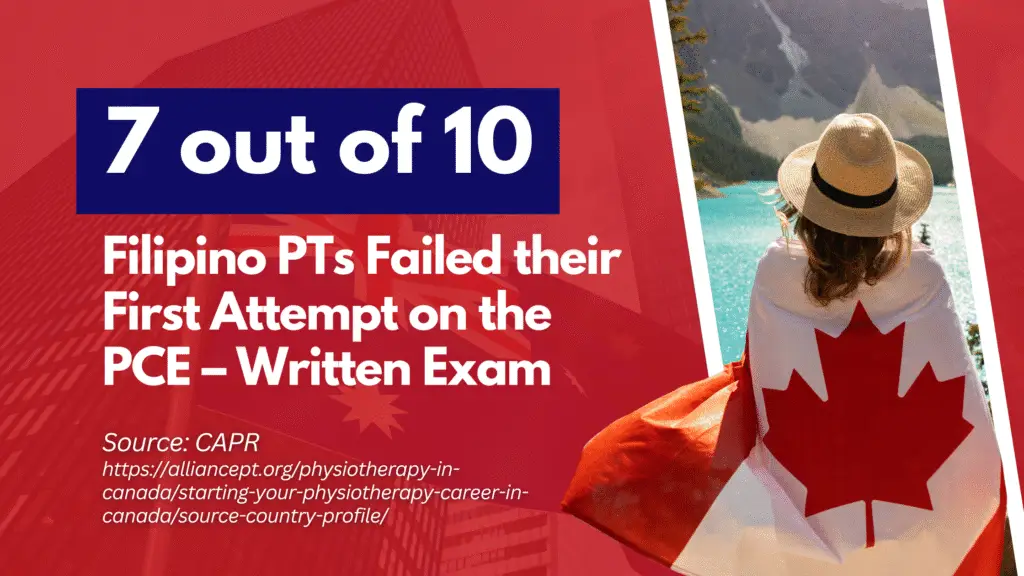
Once CAPR determines that your education is comparable, you may be allowed to take the Canadian Physiotherapy Competency Examination (PCE).
This exam evaluates whether internationally educated physiotherapists meet Canadian practice standards.
Step 5: Pass the Physiotherapy Competency Examination
The exam typically includes:
Written examination
Clinical competency evaluation (depending on province)
Passing this exam is necessary before you can obtain a license.
Step 6: Register with a Provincial Regulatory College
After passing the exam, you must apply for licensure with a provincial regulatory authority.
Examples include:
College of Physiotherapists of Ontario
College of Physical Therapists of British Columbia
Licensure requirements vary slightly by province.
Step 7: Apply for Immigration or Work Permit
Once licensed, you can pursue immigration pathways such as:
Express Entry
Provincial Nominee Program
Employer-sponsored work permits
Many Filipino PTs eventually obtain Canadian permanent residency.
How Long Does the Process Take?
The timeline varies depending on exam schedules and document verification.
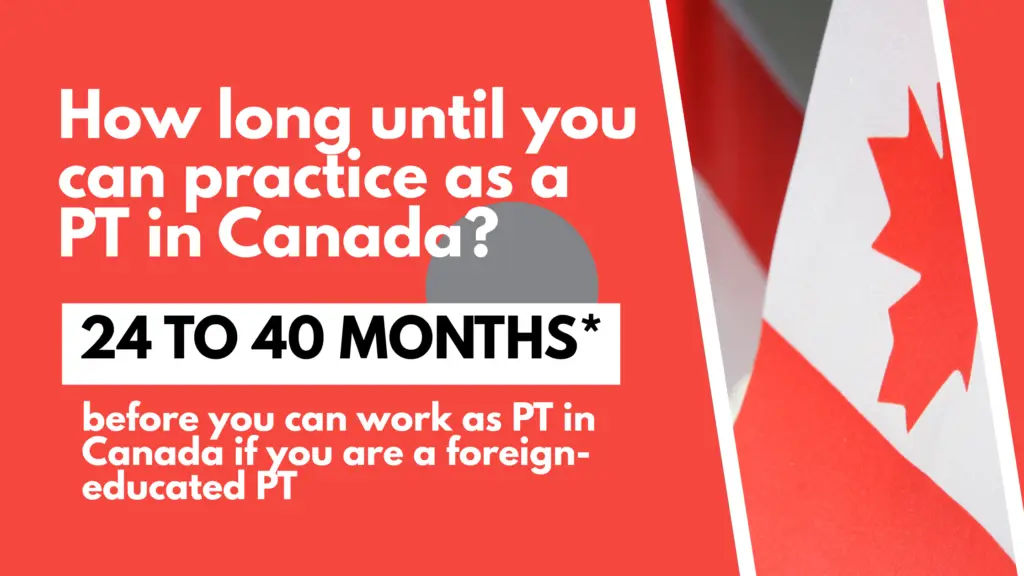
Total estimated timeline: 2 years to 3.5 years or (24 to 40 months) depending on your success in passing the CAPR Physiotherapy Competency Exam.
Cons and Challenges of Migrating to Canada as a PT
Despite the opportunities, many Filipino PTs face several challenges.
1. Difficult Licensure Process
The CAPR credentialing and exam process can be complex and time-consuming.
Many internationally educated physiotherapists struggle with:
Documentation requirements
Exam preparation
Long processing times
2. High Costs
Expenses may include:
Credential assessment fees
Language tests
Exam fees
Review programs
Immigration costs
Total expenses can reach CAD $5,000–$15,000 or more.
3. Limited Review Centers in the Philippines
Many Filipino PTs must rely on:
Self-study
Online review programs
Overseas preparation courses
4. Competition for Jobs
Even after passing the exam, securing your first job can take time.
Newcomers often start as:
Resident physiotherapists
Assistant roles
Rehabilitation staff
4. Housing Crisis in Canada for Immigrants
Before migrating, consider looking into your housing options due to reported very high price of housing with an ongoing housing crisis in Canada for immigrants
Can Filipino physical therapists work in Canada?
Is a master’s degree required to work as a physiotherapist in Canada?
Can I start the CAPR process while still in the Philippines?
Is Canada still a good destination for Filipino physical therapists?
Final Thoughts: How to Become a PT in Canada from the Philippines
Becoming a physical therapist in Canada from the Philippines is possible—but it requires careful preparation, patience, and financial planning.
The process involves credential assessment, licensing exams, and regulatory registration, which can take several years to complete.
For Filipino PTs willing to invest time and effort, Canada can provide:
Excellent career opportunities
Long-term immigration pathways
A stable future in healthcare.
If you’re planning to work abroad as a physical therapist, explore more guides on TherapyJobsAbroad.com to learn about opportunities in Canada, the United States, the UK, Australia, and other destinations.