PT Jobs in Australia for Foreigners: Why Getting a Visa Is Not as Easy as You Think
Many Filipino physical therapists dream of working abroad, and Australia is often one of the most attractive destinations. With competitive salaries, strong healthcare infrastructure, and a high quality of life, it is easy to see why many internationally educated physiotherapists aim to migrate there.
However, many applicants underestimate how difficult it can be to legally work as a physical therapist in Australia. Passing the APC licensure exam is only one part of the process. Obtaining the right visa, meeting immigration requirements, and securing employer sponsorship can be far more challenging.
This guide explains the Australia visa options for Filipino physical therapists, including the requirements, processing timeline, advantages, and challenges of working legally as a PT in Australia.
Quick Summary: Working as a Physical Therapist in Australia
Australia offers excellent career opportunities for physiotherapists, but the process of migration can be long and complicated.
Foreign physical therapists must typically complete the following steps:
Pass the professional assessment conducted by the Australian Physiotherapy Council
Meet English language requirements
Register with the Physiotherapy Board of Australia
Qualify for an Australian work visa
Even after completing these steps, many applicants still struggle with the immigration process because of strict visa eligibility rules and limited employer sponsorship opportunities.
Australia Visa Options for Filipino PTs

Why Australia Is Attractive for Physical Therapists
Many healthcare professionals consider Australia because of its strong healthcare sector and excellent working conditions.
Some of the key benefits include:
Competitive salary levels
Opportunities for career growth
High standards of healthcare practice
Potential pathways to permanent residency
Physiotherapists working in Australia typically earn between AUD 65,000 and AUD 120,000 per year, depending on experience, location, and specialization.
Why Getting a Visa Is Often the Hardest Step
While demand for healthcare professionals exists, Australia’s immigration system is structured and highly competitive.
Several factors make it difficult for foreign physiotherapists to obtain a work visa.
Strict Points-Based Immigration System
Australia uses a skilled migration points system to select candidates.
Points are awarded based on factors such as:
Age
English proficiency
Educational qualifications
Applicants must usually score at least 65 points, but higher scores significantly increase the chances of receiving an invitation to apply for a visa.
Limited Employer Sponsorship
Unlike some countries where hospitals actively recruit foreign healthcare workers, Australian employers are often cautious about sponsoring overseas candidates.
Reasons include:
Sponsorship costs
Administrative requirements
Availability of local graduates
As a result, finding an employer willing to sponsor a foreign physiotherapist can be challenging.
Licensing Must Be Completed First
Before applying for most visa pathways, internationally educated physiotherapists must complete the professional assessment conducted by the Australian Physiotherapy Council.
The assessment typically includes:
Eligibility review
Written examination
Clinical examination
Completing the entire process can take one to two years.

Australia Visa Options for Filipino Physical Therapists
There are several visa pathways that foreign physiotherapists may pursue depending on their qualifications and circumstances.
Skilled Independent Visa (Subclass 189)
The Skilled Independent Visa allows professionals to live and work permanently in Australia without employer sponsorship.
Key Features
-
Permanent residency
-
No employer sponsor required
-
Points-based selection
Requirements
-
Skills assessment through the Australian Physiotherapy Council
-
Strong English test results
-
Competitive immigration points score
-
Invitation from the Australian government
Although this visa offers independence, it is highly competitive.
Skilled Nominated Visa (Subclass 190)
This visa requires nomination from an Australian state or territory government.
Key Features
-
Permanent residency
-
Additional points from state nomination
-
Higher chances of selection compared to independent visas
Each state maintains its own list of occupations in demand, and physiotherapists may not always appear on every state list.
Temporary Skill Shortage Visa (Subclass 482)
The Temporary Skill Shortage visa allows an employer to sponsor a foreign professional for temporary work.
Key Features
-
Employer-sponsored visa
-
Valid for several years
-
Potential pathway to permanent residency
Requirements
-
Job offer from an approved sponsor
-
Relevant work experience
-
English language proficiency
-
Professional licensing eligibility
However, many employers prefer candidates who already have work rights in Australia.
Skilled Work Regional Visa (Subclass 491)
This visa encourages skilled professionals to work in regional areas of Australia where labor shortages are more common.
Key Features
-
Temporary visa valid for five years
-
Requires state nomination or family sponsorship
-
Potential pathway to permanent residency
Regional healthcare facilities sometimes offer better opportunities for foreign physiotherapists.
Basic Requirements for Filipino Physical Therapists
To legally work in Australia, internationally educated physiotherapists must meet several professional and immigration requirements.
Professional Assessment
Foreign PTs must undergo credential assessment through the Australian Physiotherapy Council.
The process evaluates whether the candidate’s education and training meet Australian standards.
English Language Test
Healthcare professionals must demonstrate strong English communication skills through tests such as:
-
IELTS Academic
-
PTE Academic
-
OET
High scores are often required for both licensing and immigration purposes.
Professional Registration
After passing the required assessments, candidates must register with the Physiotherapy Board of Australia before they can legally practice.
Processing Timeline
The complete process of becoming a physiotherapist in Australia can take several years.
Typical timeline including Australia Visa options for Filipino PTs :
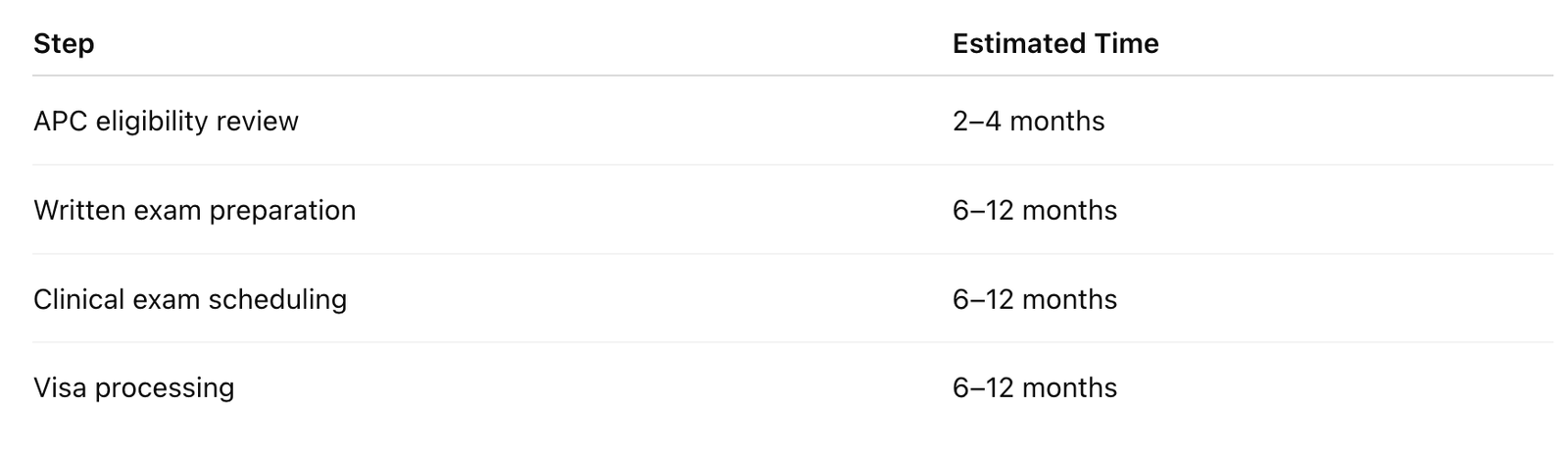
Unexpected delays are common due to exam scheduling and visa processing backlogs.
Pros of Working as a Physical Therapist in Australia
High Earning Potential
Australia offers competitive salaries compared with many other countries.
Strong Work-Life Balance
Healthcare professionals in Australia often enjoy structured working hours, paid leave, and supportive workplace policies.
Pathway to Permanent Residency
Several visa programs provide opportunities for long-term settlement and eventual citizenship.
Advanced Healthcare System
Australia has modern healthcare facilities and high professional standards, providing opportunities for continuous learning and specialization.
Cons of Migrating to Australia as a Physical Therapist
Expensive Licensing Process
The APC assessment, English exams, and visa applications can cost thousands of dollars.
Challenging Clinical Examination
Many internationally educated physiotherapists find the APC clinical exam to be one of the most difficult parts of the process.
Uncertain Visa Outcome
Even after completing licensing requirements, applicants may still struggle to secure a visa or employer sponsorship.
Long Processing Time
The entire migration journey can take several years before a foreign physiotherapist can start working in Australia.
Australia vs Other Countries for Physical Therapist Migration
Some internationally educated physiotherapists explore alternative countries with faster migration pathways.

For applicants seeking quicker overseas employment, some destinations may offer simpler pathways.
Key Takeaways for Filipino Physical Therapists
Before starting the migration journey, physical therapists should consider several important realities:
Passing the professional licensing exam is only the beginning
Visa pathways can be highly competitive
Employer sponsorship is not guaranteed
The process requires patience and financial preparation
Understanding the Australia visa options for Filipino physical therapists can help applicants make informed decisions and avoid costly mistakes.
Most Common Questions about Australia Visa Options for Filipino Physical Therapists
Can Filipino physical therapists work in Australia?
How long does it take to become a physiotherapist in Australia as a foreigner?
Is employer sponsorship required to work in Australia?
What English tests are accepted?

Final Thoughts on Australia Visa Options for Filipino PTs
Australia remains a desirable destination for many healthcare professionals around the world. The country offers excellent career opportunities, competitive salaries, and a high quality of life.
However, the journey to becoming a physiotherapist in Australia can be long and complex. From passing the professional assessments to qualifying for a work visa, foreign applicants must navigate multiple steps before they can legally practice.
For Filipino physical therapists considering migration, understanding the Australia visa options for Filipino physical therapists is essential for planning a successful international career.