Top NPTE Credentialing Mistakes Filipino PTs Make (And How to Avoid Them)
A Complete Guide for Filipino PTs Preparing for NPTE Credentialing & U.S. Licensure
For many Filipino Physical Therapists, becoming a licensed Physical Therapist in the United States is a life-changing career move. The U.S. offers competitive salaries, diverse practice settings, advanced professional growth, and long-term stability. But before you can take the NPTE (National Physical Therapy Examination) and practice legally, you must pass through one critical step:
NPTE Credentialing
Credentialing is where most Filipino PTs run into delays, unexpected expenses, or even outright denials. The process can be confusing, especially for first-time applicants navigating U.S. requirements while coming from the Philippine education and licensing system.
This guide breaks down the most common credentialing mistakes Filipino PTs make—and how you can avoid them completely. By understanding these pitfalls early, you’ll save months (or even years) of waiting, reduce costs, and move smoothly toward working as a U.S. Physical Therapist.
Table of Contents

What Is Credentialing (and Why Is It Required)?
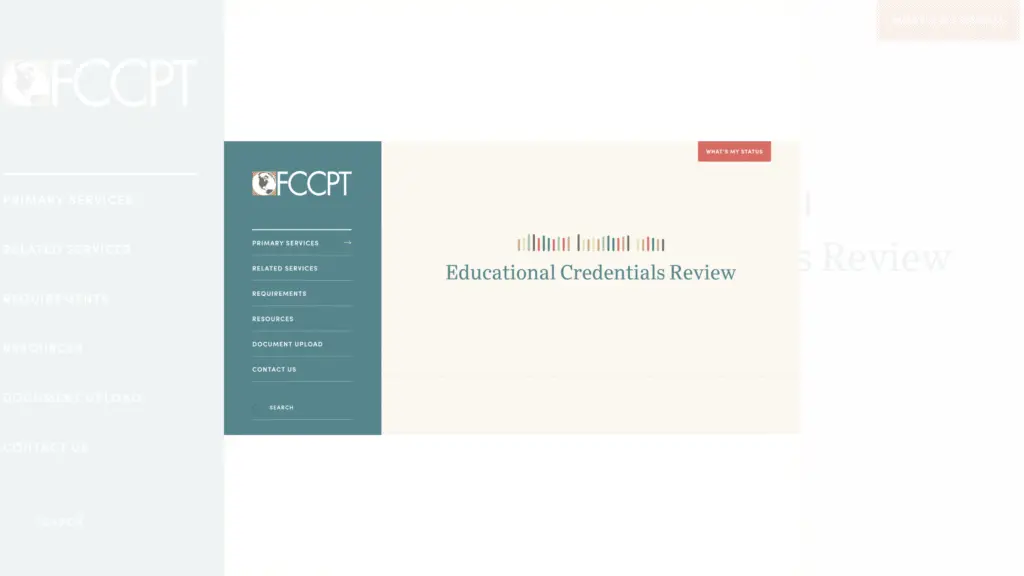
Before you can take the NPTE and apply for state licensure, you must undergo an evaluation conducted by FCCPT, ICD, or CGFNS—organizations authorized to verify that your foreign PT education is equivalent to a U.S. CAPTE-accredited DPT curriculum.
Credentialing agencies look at:
Your PT degree
Course descriptions and syllabi
Clinical hours
PRC license status
General education courses
In short: they check if your education meets U.S. standards.
Only then can you move forward to NPTE registration, TOEFL, and state licensure.
Unfortunately, many Filipino PTs unknowingly make mistakes that cost them time and money. Let’s break them down.
Top Credentialing Mistakes Filipino PTs Make
(And how you can avoid them — step by step)
Mistake #1: Choosing the Wrong Credentialing Agency
Not all agencies are accepted by every state. Yet many Filipino PTs apply to the wrong one simply because a friend did, or because it was the cheapest option.
Why this is a big problem
If the state you want to work in does not accept your credentialing report:
You cannot apply for licensure
You must repeat the entire process
You waste $800–$1,200 and 4–12 months
How to avoid this
Before applying, research:
Which agency each state accepts
Whether the state requires a specific Type 1, Type 1 Renewal, Educational Credentials Review, or CES Report
Whether the state demands TOEFL before the credentialing report
Quick guide:
FCCPT Type 1 → universally accepted by all states, especially required by Texas, California, New York, Nevada, Florida, and many more.
ICD / CGFNS CES → accepted in some states (e.g., Colorado, Washington, Illinois).
CGFNS VisaScreen → required for employment-based immigration (but not always enough for NPTE licensure review).
If you’re unsure, always choose to contact FCCPT or inquiry at the state board of license of your preferred state assignment. Additional option is to find an employer you can process these for you and advise which credentialing would be the best to start your npte journey.
Mistake #2: Submitting Incomplete or Incorrect Documents
This is one of the most common reasons Filipino PT applications get delayed or denied.
Common documentation issues:
Missing or incorrect course syllabi
PRC license not verified properly
University sending the wrong sealed envelope
Incorrect name formats (married vs maiden name)
Missing TOEFL scores
University transcripts missing clinical hours
No internship rotation breakdown
Why this delays your application
Credentialing agencies will not start or complete your review until ALL documents are submitted correctly.
How to avoid this
Prepare a credentialing checklist before applying.
Essential documents typically include:
Official transcripts (sent directly by your university)
Course descriptions / syllabi for all PT subjects
PRC license verification
High school records (some agencies require this)
Internship hours with rotation breakdown
TOEFL iBT scores (if required by your chosen state)
Name affidavit (if you have married name vs school name differences)
The key is accuracy and completeness.
One missing document can delay your review by months.
Mistake #3: Not Preparing or Updating Course Syllabi
Philippine PT schools differ in how detailed or updated their syllabi are. Many were not designed to match U.S. DPT requirements, which is why lacking syllabi is a major problem.
Why this matters
The credentialing agency uses your syllabi to verify:
Content covered
Unit or hour count
Lab vs lecture breakdown
Compliance with CAPTE criteria
If your syllabus is too short (e.g., just 1 page), missing topics, or outdated, it will hurt your credentialing evaluation.
How to avoid this
Request your university’s latest and most detailed syllabi. If your university does not have them:
Request updated versions from program heads
Prepare supplemental documentation (without falsifying anything)
Ensure all major PT subjects have detailed descriptions
The more complete and aligned your syllabi are, the smoother your evaluation.
Mistake #4: Underestimating the General Education Requirements
Some Filipino PTs think only PT courses matter. But U.S. credentialing agencies also evaluate your general education (GE) subjects, such as:
English Composition
Biology
Social Sciences
Mathematics
Natural Sciences
Many Filipino PT curriculums lack certain GE requirements, especially Biology and Chemistry.
Why this causes delays
If your GE courses do not meet U.S. standards, you will be required to take additional courses, depending on the subject or unit deficiency that FCCPT finds. This can set your application back by several months.
How to avoid this
Before applying:
Review your GE subjects
Compare them to CAPTE GE requirements
Identify any gaps early
Complete missing subjects at an accredited college (online options available)
Being proactive can save you 6–12 months.
Mistake #5: Stressing on TOEFL Requirements before starting NPTE credentialing
Yes there are states that requires TOEFL before you can apply for licensure or sit for NPTE but it does not apply to all.
You can jumpstart your NPTE credentialing, supplemental subjects and even take your NPTE even without TOEFL. Knowing this can save you time because as most PTs gets confused on when they should take the TOEFL.
Mistake #6: Applying for Credentialing Without a Clear State Plan
Many Filipino PTs apply first and choose a state later. This causes major problems because states differ in:
Accepted credentialing agency
TOEFL requirements
Number of clinical hours required
VisaScreen constraints
Additional jurisprudence exams
Requirements for PTA vs PT credentials
How this hurts your application
You may end up:
With the wrong credentialing report
Having to repeat the entire process
Paying for additional evaluations
Delaying NPTE eligibility
How to avoid this
Pick your U.S. state before you begin credentialing.
Consider:
Job opportunities
Cost of living
Sponsorship options
Demand for foreign-trained PTs
Whether the state accepts foreign degrees without extra coursework
Popular states for Filipino PTs include:
Texas
New York
Florida
Illinois
California (most complex)
Once you select a target state, build your credentialing strategy around it.
Mistake #7: Not Keeping Track of Deadlines and Communication
Credentialing agencies often send:
Requests for additional documents
Clarifications
Deadlines
Updates on missing items
Many Filipino PTs miss these emails because:
They use outdated email addresses
Emails go to spam
They don’t check their application portal
University registrars delay document submission
How to avoid this
Use a dedicated email for your NPTE journey
Check your portal (FCCPT/ICD/etc.) weekly
Follow up with your university regularly
Keep digital and printed copies of everything
Track all deadlines using a checklist or Google Calendar
Mistake #8: Failing to Prepare for Additional Coursework Requirements
Sometimes, even with complete documents, U.S. credentialing agencies may find deficiencies in areas such as:
Neuroscience
Pharmacology
Pediatrics
Cardiopulmonary PT
Differential Diagnosis
Imaging
Evidence-Based Practice
General Education subjects
Why this happens
Many Philippine PT curriculums are excellent but do not exactly match U.S. DPT curriculum structures.
How to avoid this
If deficiencies are reported:
Take required courses through accredited U.S. institutions
Choose online options to save money
Complete courses before deadlines
Notify your credentialing agency immediately after completion

Why Working With an Agency Makes Everything Easier
Successfully credentialing as a Filipino PT—and eventually becoming a licensed Physical Therapist in the U.S.—does not have to be overwhelming. While you can complete the process independently, the reality is that credentialing involves strict requirements, multiple agencies, and hundreds of minor details that can easily cause delays.
This is why many Filipino PTs choose to work with agencies that specialize in NPTE credentialing, immigration assistance, and U.S. job placement. With expert guidance, you avoid costly mistakes and move through the process faster and more confidently.
BONUS BENEFIT: Agencies Also Help You Secure a Job in the USA
Perhaps the biggest advantage of working with an established agency is that they don’t just help you get NPTE-eligible—they help you get employed.
A good agency provides:
Job placement with reputable U.S. employers
Assistance securing H-1B or EB-3 sponsorship
Guidance throughout immigration and relocation
Contract negotiation support
Transition assistance once you arrive in the U.S.
This means you don’t go through credentialing alone—you go through it with a clear end goal: a stable, well-paying Physical Therapy job in America.
Final Thoughts: Your NPTE Journey Starts With Proper Credentialing
Credentialing is the biggest bottleneck for Filipino PTs, but it doesn’t have to be. By understanding and avoiding the common mistakes above, you will:
Save 6–18 months of delays
Avoid repeating expensive evaluations
Maximize your chances of NPTE eligibility
Move faster toward practicing as a U.S. Physical Therapist
Becoming a PT in the U.S. is absolutely achievable for Filipino PTs—with the right strategy, complete documents, and proactive planning.